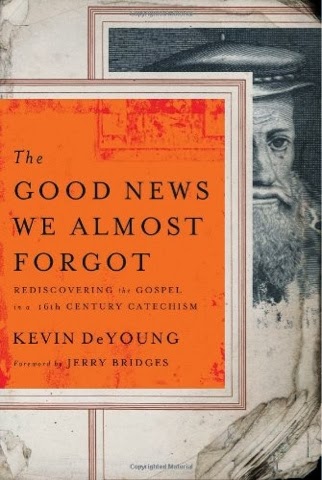
Showing posts with label Heidelberg Catechism series. Show all posts

Sunday, December 28, 2014

Heidelberg Catechism Week 52

127. Q. What does the sixth request mean? A. "And lead us not into temptation, but deliver us from the evil one" means, By ourselves we are too weak to hold our own even for a moment. And our sworn enemies - the devil, the world, and our own flesh - never stop attacking us. And so, Lord, uphold us and make us strong with the strength of Your Holy Spirit, so that we may not go down to defeat in this spiritual struggle, but may firmly resist our enemies until we finally win the complete victory.

128. Q. What does your conclusion to this prayer mean? A. "For Yours is the kingdom and the power and the glory forever" means, We have made all these requests of You because, as our all-powerful King, You not only want to, but are able to give us all that is good; and because Your holy name, and not we ourselves, should receive all the praise, forever.

129. Q. What does that little word "Amen" express? A. "Amen" means, This is sure to be! It is even more sure that God listens to my prayer, than that I really desire what I pray for.

My reflections on the reading from the book...

DeYoung: "God loves it when we pray, because sincere, honest prayer in Jesus' name shows two of the most essential virtues in a Christian: humility and trust." 


"For we have not an high priest which cannot be touched with the feeling of our infirmities; but was in all points tempted like as we are, yet without sin. Let us therefore come boldly unto the throne of grace, that we may obtain mercy, and find grace to help in time of need" (Heb. 4:15-16). 


"God is faithful, who will not suffer you to be tempted above that ye are able; but will with the temptation also make a way to escape, that ye may be able to bear it" (1 Cor. 10:13). That "way to escape" is not freedom from temptation, but victory in temptation. The apostle Paul knew this deliverance, and he saw it to be a continuing deliverance: "The Lord shall deliver me from every evil work, and will preserve me unto His heaven kingdom: to Whom be glory for ever and ever. Amen" (2 Tim. 4:18). And one day we will be completely delivered from the presence of all sin and evil!

Thine is the kingdom – Thy kingdom come!
Praise ye the Lord, the Almighty, the King of creation!

Thine is the power – Thy will be done!
Praise ye the Lord, Who over all things so wondrously reigneth!

Thine is the glory – Hallowed be Thy name!
Praise ye the Lord! O let all that is in me adore Him!

"Now unto Him that is able to keep you from falling, and to present you faultless before the presence of His glory with exceeding joy, to the only wise God our Saviour, be glory and majesty, dominion and power, both now and ever. Amen." (Jude 24-25)

Sunday, December 21, 2014

Heidelberg Catechism Week 51

126. Q. What does the fifth request mean? A. "Forgive us our debts, as we also have forgiven our debtors" means, Because of Christ's blood, do not hold against us, poor sinners that we are, any of the sins we do or the evil that constantly clings to us. Forgive us just as we are fully determined, as evidence of Your grace in us, to forgive our neighbors.

My reflections on the reading from the book...

DeYoung: "Forgiveness means our sins are no longer counted against us and we no longer count the sins of those who have hurt us."


Unwillingness to extend forgiveness to those who have wronged me is a sin that I must confess and repent of, if I sense it creeping into my life – because it hinders my fellowship with God! The parable of the unmerciful servant (Matt. 18:23-35) tells of one who refused to demonstrate to others the same forgiveness and kindness that he himself had received. This parable underscores the vital link between God's forgiveness of us and our own forgiving spirit. If I am unable to forgive others, I should look closely at my relationship with the Lord! 


May I treat others as the Lord has treated me – with forgiveness and grace! "Be ye kind one to another, tenderhearted, forgiving one another, even as God for Christ's sake hath forgiven you" (Eph. 4:32). It is through my Christlike attitude of forgiveness that I point others to the Saviour!

Sunday, December 14, 2014

Heidelberg Catechism Week 50

125. Q. What does the fourth request mean? A. "Give us today our daily bread" means, Do take care of all our physical needs so that we come to know that You are the only source of everything good, and that neither our work and worry nor Your gifts can do us any good without Your blessings. And so help us to give up our trust in creatures and to put trust in You alone.

My reflections on the reading from the book...

DeYoung: "The simple act of getting on our knees... is the surest sign of our humility and dependence on God. There may be many reasons for our prayerlessness - time management, busyness, lack of concentration - but most fundamentally, we ask not because we think we need not... Prayerlessness is an expression of our meager confidence in God's ability to provide and of our strong confidence in our ability to take care of ourselves without God's help."


It is no accident that the Lord's Prayer opens with petitions concerning God Himself (His glory, kingdom, and will), before turning to personal needs. This order reflects the priorities we must maintain in our thinking and our praying. In fact, this sixth chapter of Matthew ends with the reminder to "seek ye first the kingdom of God, and His righteousness," and THEN "all these things shall be added unto you" (verse 33).

Yet we are indeed invited to make our everyday material needs known to our Heavenly Father. We acknowledge that we come to the throne of grace empty-handed, dependent upon our Jehovah-Jireh, the God who provides. When we read Abraham's confident statement to Isaac, "My son, God will provide himself a lamb" (Gen. 22:8), we look ahead to the time when Christ, the Lamb of God, became God's provision for us – the perfect Substitute and Sacrifice.

Exodus 16 records for us how our faithful God sustained Israel each day with manna in the wilderness. Through this miracle, the people learned lessons about daily dependence and trust. The Lord desires for us to exhibit the same attitude as we look to Him in faith to provide everything we need: from physical nourishment and strength, to the salvation of our souls! Let us sing with the Psalmist, "The eyes of all look to You, and You give them their food in due time. You open Your hand and satisfy the desire of every living thing" (Ps. 145:15-16).

Sunday, December 7, 2014

Heidelberg Catechism Week 49

124. Q. What does the third request mean? A. "Your will be done on earth as it is in heaven" means, Help us and all people to reject our own wills and to obey Your will without any back talk. Your will alone is good. Help us one and all to carry out the work we are called to, as willingly and faithfully as the angels in heaven.

My reflections on the reading from the book...

DeYoung: "When we pray 'Your will be done,' we are confessing our confidence that God knows best, that His plans are good, that His way is always the right way." 


George Muller, a servant of the Lord known for his perseverance in prayer, provides us with some valuable counsel:
  1. Be slow to take new steps in the Lord's service, or in your business, or in your families: weigh everything well; weigh all in the light of the Holy Scriptures and in the fear of God.
  2. Seek to have no will of your own, in order to ascertain the mind of God, regarding any steps you propose taking, so that you can honestly say you are willing to do the will of God, if He will only please to instruct you.
  3. But when you have found out what the will of God is, seek for His help, and seek it earnestly, perseveringly, patiently, believingly, expectantly; and you will surely in His own time and way obtain it.
Thou sweet beloved will of God,
My anchor ground, my fortress hill,
My spirit's silent, fair abode,
In Thee I hide me, and am still.

O Will that willest good alone,
Lead Thou the way, Thou guidest best;
A little child, I follow on,
And trusting, lean upon Thy breast.

O lightest burden, sweetest yoke!
It lifts, it bears my happy soul;
It giveth wings to this poor heart;
My freedom is Thy grand control.

Upon God's will I lay me down,
As child upon its mother's breast;
No silken couch, nor softest bed,
Could ever give me such deep rest.

Thou wonderful, grand will, my God,
With triumph now I make it mine;
And faith shall cry a joyous "Yes!"
To ev'ry dear command of Thine. 

(Gerhard Tersteegen, stanzas 1-2, & Jean S. Pigott, stanzas 3-5)

Sunday, November 30, 2014

Heidelberg Catechism Week 48

123. Q. What does the second request mean? A. "Your kingdom come" means, Rule us by Your Word and Spirit in such a way that more and more we submit to You. Keep Your church strong, and add to it. Destroy the devil's work; destroy every force which revolts against You and every conspiracy against Your Word. Do this until Your kingdom is so complete and perfect that in it You are in all.

My reflections on the reading from the book...

DeYoung: "The kingdom is not about excellence in behavior. It's about our willing submission to God and living a life of love that befits those who belong to such a lovely King."


And though this world, with devils filled, 
Should threaten to unto us, 
We will not fear, for God hath willed 
His truth to triumph through us... 
Let goods and kindred go, 
This mortal life also; 
The body they may kill:
God's truth abideth still, 
His Kingdom is forever. 
(Martin Luther)

His kingdom cannot fail;
He rules o'er earth and heav’n;
The keys of death and hell
Are to our Jesus giv'n:
He all His foes shall quell,
Shall all our sins destroy;
Our songs of praise shall swell
With everlasting joy.
Lift up your heart, lift up your voice!
Rejoice, again I say, rejoice!
(Charles Wesley)

Sunday, November 23, 2014

Heidelberg Catechism Week 47

122. Q. What does the first request mean? A. "Hallowed be Your name" means, Help us to really know You, to bless, worship, and praise You for all Your works and for all that shines forth from them: Your almighty power, wisdom, kindness, justice, mercy, and truth. And it means, help us to direct all our living - what we think, say, and do - so that Your name will never be blasphemed because of us but always honored and praised.

My reflections on the reading from the book...

DeYoung: "Jesus teaches us that the first thing we ought to pray for, before we ask for anything else, is that God would be glorified and set apart as holy... Jesus would have us understand that the point of prayer is God's glory... 'Our Father in heaven, the concern nearest to my heart and the one that shapes all other requests is that Your name would be regarded as holy, that Your fame would be heralded in the earth, that You would be honored among the nations, that Your glory would be magnified for all to see. O Lord, be pleased to cause men everywhere to take pleasure in You, that You might be praised now and forever."

When we pray "Hallowed be Thy name," we are not praying for God's name to become "sanctified" or "made holy," for holiness is already one of God's perfections. Rather, we are asking for the Lord to make the greatness of His name displayed and magnified even further. "From the rising of the sun unto the going down of the same the LORD’s name is to be praised" (Ps. 113:3).

Am I in any way hindering the Lord’s name from being magnified and praised? I should consistently be examining my life for areas that that might be bringing wrong honor and glory to myself instead of the name of the Lord. 


"Let your light so shine before men, that they may see your good works, and glorify your Father which is in heaven." (Matt. 5:16)

"Not to us, O LORD, not to us, but to Your name give glory, for the sake of Your steadfast love and Your faithfulness!" (Psalm 115:1)

Sunday, November 16, 2014

Heidelberg Catechism Week 46

120. Q. Why did Christ command us to call God "our Father"? A. At the very beginning of our prayer Christ wants to kindle in us what is basic to our prayer - the childlike awe and trust that God through Christ has become our Father. Our fathers do not refuse us the things of this life; God our Father will even less refuse to give us what we ask in faith.

121. Q. Why the words "in heaven"? A. Those words teach us not to think of God's heavenly majesty as something earthly and to expect everything for body and soul from His almighty power.


My reflections on the reading from the book...

God Himself has revealed the name of "Father" as one by which we can call Him. As His children we can trust Him to know what is best for us. A father knows what his child needs much better than the child does. When I find myself begging God for something, I have to remind myself that He has my good in view even when it feels like He is holding back something I desperately want. Our omniscient, omnipotent Heavenly Father delights to hear and answer our prayers according to His will!

Sunday, November 9, 2014

Heidelberg Catechism Week 45

116. Q. Why do Christians need to pray? A. Because prayer is the most important part of the thankfulness God requires of us. And also because God gives His grace and Holy Spirit only to those who pray continually and groan inwardly asking God for these gifts and thanking Him for them.

117. Q. How does God want us to pray so that He will listen to us? A. First, we must pray from the heart to no other than the one true God, who has revealed Himself in His Word, asking for everything He has commanded us to ask for. Second, we must acknowledge our need and misery, hiding nothing, and humble ourselves in His majestic presence. Third, we must rest on this unshakable foundation: even though we do not deserve it, God will surely listen to our prayer because of Christ our Lord. This is what He promised us in His Word.

118. Q. What did God command us to pray for? A. Everything we need, spiritually and physically, as embraced in the prayer Christ our Lord Himself taught us.


119. Q. What is the prayer? A. Our Father in heaven, hallowed by Your name, Your kingdom come, Your will be done on earth as it is in heaven. Give us today our daily bread. Forgive us our debts, as we also have forgiven our debtors. And lead us not into temptation, but deliver us from the evil one. For Yours is the kingdom and the power and the glory forever. Amen.

My reflections on the reading from the book...

I'm so thankful for the privilege of coming to the throne of grace, bringing my petitions large and small to the great King of kings, through Christ the perfect Mediator.

Sunday, November 2, 2014

Heidelberg Catechism Week 44

113. Q. What is God's will for you in the tenth commandment? A. That not even the slightest thought or desire contrary to any one of God's commandments should ever arise in my heart. Rather, with all my heart I should always hate sin and take pleasure in whatever is right.

114. Q. But can those converted to God obey these commandments perfectly? A. No. In this life even the holiest have only a small beginning of this obedience. Nevertheless, with all seriousness of purpose, they do begin to live according to all, not only some, of God's commandments.

115. Q. No one in this life can obey the Ten Commandments perfectly: why then does God want them preached so pointedly? A. First, so that the longer we live the more we may come to know our sinfulness and the more eagerly look to Christ for forgiveness of sins and righteousness. Second, so that, while praying to God for the grace of the Holy Spirit, we may never stop striving to be renewed more and more after God's image, until after this life we reach our goal: perfection.

My reflections on the reading from the book...

Coveting, the issue covered in the 10th Commandment, is essentially idolatry. DeYoung distinguishes coveteousness from desire: "One of two things must be present for a lawful desire to become coveting. First, we covet when we desire what belongs to someone else... Or we can covet when our desire leads to or is an expression of discontentment." DeYoung goes on to state, "Contentment and covetousness are opposites." I confess I struggle a lot with contentment. My Wednesday morning breakfast friends and I have just started reading Jeremiah Burrough's classic book The Rare Jewel of Christian Contentment, and it is already proving to be a convicting read. No, I will never achieve perfection in this earthly life, but God wants my heart united to fear His name. May I give Him my whole heart and refuse to hold back in any area!

Sunday, October 26, 2014

Heidelberg Catechism Week 43

112. Q. What is God's will for you in the ninth commandment? A. God's will is that I never give false testimony against anyone, twist no one's words, not gossip or slander, nor join in condemning anyone without a hearing or without a just cause. Rather, in court and everywhere else, I should avoid lying and deceit of every kind; these are devices the devil himself uses, and they would call down on me God's intense anger. I should love the truth, speak it candidly, and openly acknowledge it. And I should do what I can to guard and advance my neighbor's good name.

My reflections on the reading from the book...

Spreading gossip has never been one of my personal vices. Yet I do confess to secretly relishing the "juicy truths" that others too freely share. It is incumbent upon me as a child of God to refuse to participate in such, no matter which side of the false testimony or gossip - the sharing OR the receiving - I encounter.


Sunday, October 19, 2014

Heidelberg Catechism Week 42

110. Q. What does God forbid in the eighth commandment? A. He forbids not only outright theft and robbery, punishable by law. But in God's sight theft also includes cheating and swindling our neighbor by schemes made to appear legitimate, such as: inaccurate measurements of weight, size, or volume; fraudulent merchandising; counterfeit money; excessive interest; or any other means forbidden by God. In addition He forbids all greed and pointless squandering of His gifts.

111. Q. What does God require of you in this commandment? A. That I do whatever I can for my neighbor's good, that I treat others as I would like them to treat me, and that I work faithfully so that I may share with those in need.

My reflections on the reading from the book...

Any means of taking anything that doesn't belong to me, or even of wasting what is given to me, is sin in the eyes of a just God. I cannot serve two masters, God and riches. The Lord invites His people to a life of generosity and wise stewardship.


Sunday, October 12, 2014

Heidelberg Catechism Week 41

108. Q. What is God's will for you in the seventh commandment? A. God condemns all unchastity. We should therefore thoroughly detest it and, married or single, live decent and chaste lives.

109. Q. Does God, in this commandment, forbid only such scandalous sins as adultery? A. We are temples of the Holy Spirit, body and soul, and God wants both to be kept clean and holy. That is why He forbids everything which incites unchastity, whether it be actions, looks, talk, thoughts, or desires. 


My reflections on the reading from the book...


The verses that I cling to...


"Keep your heart with all diligence; for out of it are the issues of life" (Proverbs 4:23).


"Blessed are the pure in heart, for they shall see God" (Matthew 5:8).


"Flee immorality. Every other sin that a man commits is outside the body, but the immoral man sins against his own body. Do you not know that your body is a temple of the Holy Spirit who is in you, whom you have from God, and that you are not your own? For you have been bought with a price: therefore glorify God in your body" (1 Corinthians 6:18-20).


"For this is the will of God, your sanctification; that is, that you abstain from sexual immorality; that each of you know how to possess his own vessel in sanctification and honor" (1 Thessalonians 4:3-4).

Sunday, October 5, 2014

Heidelberg Catechism Week 40

105. Q. What is God's will for you in the sixth commandment? A. I am not to belittle, insult, hate, or kill my neighbor - not by my thoughts, my words, my look or gesture, and certainly not by actual deeds - and I am not to be party to this in others; rather, I am to put away all desire for revenge. I am not to harm or recklessly endanger myself either. Prevention of murder is also why government is armed with the sword.

106. Q. Does this commandment refer only to killing? A. By forbidding murder God teaches us that He hates the root of murder: envy, anger, vindictiveness. In God's sight all such are murder.

107. Q. Is it enough then that we do not kill our neighbor in any such way? A. No. By condemning envy, hatred, and anger God tells us to love our neighbors as ourselves, to be patient, peace-loving, gentle, merciful, and friendly to them, to protect them from harm as much as we can, and to do good even to our enemies. 

My reflections on the reading from the book...


The sanctity of human life is under attack today. Abortion and euthanasia are being held up as "rights," while the right to protect oneself is being stripped away. Violence and terror reigns all throughout the world, while God's authority is denied and His laws ignored. It all boils down to the heart. "The heart is deceitful above all things, and desperately wicked..." (Jeremiah 17:9). Instead of loving God and loving our neighbor, our sinful flesh seeks merely its own gratification, protection, and exaltation. O Lord, cleanse my heart of envy, anger, bitterness, pride, and selfishness!

Sunday, September 28, 2014

Heidelberg Catechism Week 39

104. Q. What is God's will for you in the fifth commandment? A. That I honor, love, and be loyal to my father and mother and all those in authority over me; that I obey and submit to them, as is proper, when they correct and punish me; and also that I be patient with their failings - for through them God choose to rule us. 

My reflections on the reading from the book...


It is incredible to see the myriad instances of "rebellion for the sake of rebellion" in today's generation of young people. It's as if parents expect and accept this as a "rite of passage" for their children. But how contrary to God's law! 

As a child, I was taught and expected to obey my mother and father because they were the authority God placed over me. And though I now live away from my parents , I still honor them, seek their counsel, and consider myself to still be under my father's protection until such a time as I would have a husband to take on that role of protector. And when my parents can no longer provide for and care for themselves, my brothers and I recognize our duty to honor them in those later years of life by supplying that necessary care.

Sunday, September 21, 2014

Heidelberg Catechism Week 38

103. Q. What is God's will for you in the fourth commandment? A. First, that the gospel ministry and education for it be maintained, and that, especially on the festive day of rest, I regularly attend the assembly of God's people to learn what God's Word teaches, to participate in the sacraments, to pray to God publicly, and to bring Christian offerings for the poor. Second, that every day of my life I rest from my evil ways, let the Lord work in me through His Spirit, and so begin already in this life the eternal Sabbath. 

My reflections on the reading from the book...


The concept of a Sabbath was present from the very beginning, when God set aside one day in seven, demonstrated in His resting on the seventh day of creation. The Mosaic Law taught God's people that they should turn aside from their regular labors to observe the Lord's Day, demonstrating their trust in God's gracious supply. Christ taught His disciples that the Sabbath was a day of freedom (Luke 13:10-17), a day for healing (Luke 14: 1-6), and a day for doing good (Mark 3:1-6). 
The fourth commandment points to the eternal rest appointed for the people of God (Hebrews 4:9-10). 

We set aside the first day of the week, as we rest from our daily employment and pursuits, to celebrate the resurrection of Christ and worship the Lord together with fellow believers.

Sunday, September 14, 2014

Heidelberg Catechism Week 37

101. Q. But may we swear an oath in God's name if we do it reverently? A. Yes, when the government demands it, or when necessity requires it, in order to maintain and promote truth and trustworthiness for God's glory and our neighbor's good. Such oaths are approved in God's Word and were rightly used by Old and New Testament believers.

102. Q. May we swear by saints or other creatures? A. No. A legitimate oath means calling upon God as the one who knows my heart to witness to my truthfulness and to punish me if I swear falsely. No creature is worthy of such honor.


My reflections on the reading from the book...


These questions continue dealing with the Third Commandment, and DeYoung explains that this is because "oath-swearing was a hot topic during the Reformation." (Anabaptist Reformers used Matthew 5:33-37 and James 5:12 to outlaw oaths altogether, failing to consider the contexts of these verses.) The Heidelberg Catechism takes the balanced position that oaths, used sparingly and in the right context, can glorify God.

Sunday, September 7, 2014

Heidelberg Catechism Week 36

99. Q. What is God's will for us in the third commandment? A. That we neither blaspheme nor misuse the name of God by cursing, perjury, or unnecessary oaths, nor share in such horrible sins by being silent bystanders. In a word, it requires that we use the holy name of God only with reverence and awe, so that we may properly confess Him, pray to Him, and praise Him in everything we do and say.

100. Q. Is blasphemy of God's name by swearing and cursing really such serious sin that God is angry also with those who do note do all they can to help prevent and forbid it? A. Yes, indeed. No sin is greater, no sin makes God more angry than blaspheming His name. That is why He commanded the death penalty for it.


My reflections on the reading from the book...


In the narrow sense of the meaning, "taking God's name in vain" is something that I personally find very offensive. And rightly so, for any child would hate to hear the name of his honored father misused. It is painful to my spirit when I have to listen to someone blaspheming the Name above all names!


A second, slightly differently, understanding of "taking God's name in vain" addresses the misuse of God's name "for purposes of our own ambition, avarice, or amusement," to quote John Calvin. I am always grieved to see those holier-than-thou "fightin' fundamentalists" toting around flaming placards, claiming to be the mouthpiece of God.


If I wear the name of "Christian" -- a follower of Christ -- then my entire life should magnify and exalt the name of Christ, never besmirching His name by my words or actions.

Sunday, August 31, 2014

Heidelberg Catechism Week 35

96. Q. What is God's will for us in the second commandment? A. That we in no way make any image of God nor worship Him in any other way than He has commanded in His Word.

97. Q. May we then no make any image at all? A. God can not and may not be visibly portrayed in any way. Although creatures may be portrayed, yet God forbids making or having such images if one's intention is to worship them or to serve God through them.


98. Q. But may not images be permitted in the churches as teaching aids for the unlearned? A. No, we shouldn't try to be wiser than God. He wants His people instructed by the living preaching of His Word - not by idols that cannot even talk.


My reflections on the reading from the book...

Those who attempt to create visual images of God (whether the Father, the Son, or the Holy Spirit) are creating a lie, because the true God is an invisible Being. God's majesty and glory cannot be represented on paper or canvas or in stone. We cannot bring God down to our level! Unfortunately this is quite common in Christianity, especially in children's Bible stories. I know of only one children's Bible that does not attempt to portray Christ! I know the view I hold to is an unpopular one - I am in the minority even here at a Christian university. But it's one I've come to have a strong conviction about, because I know how easy it is for me to form mental pictures of just about anything I dwell on. God wants us to seek Him in His written Word and through Christ the Living Word. Faith comes by hearing, not by seeing. We walk by faith, not by sight!

Sunday, August 24, 2014

Heidelberg Catechism Week 34

92. Q. What does the Lord say in His Law? A. [The Catechism quotes from Exodus 20:1-17, reciting the giving of the Ten Commandments.]

93. Q. How are these commandments divided? A. Into two tables. The first has four commandments, teaching us what our relation to God should be. The second has six commandments, teaching us what we owe our neighbor.


94. Q. What does the Lord require in the first commandment? A. That I, not wanting to endanger my very salvation, avoid and shun all idolatry, magic, superstitious rites, and prayer to saints or to other creatures. That I sincerely acknowledge the only true God, trust Him alone, look to Him for every good thing humbly and patiently, love Him, fear Him, and honor Him with all my heart. In short, that I give up anything rather than go against His will in any way.


95. Q. What is idolatry? A. Idolatry is having or inventing something in which one trusts in place of or alongside of the only true God, who has revealed Himself in His Word.


My reflections on the reading from the book...


This week's reading marks the commencement of a large "unit" dealing with the Ten Commandments. DeYoung makes several good points...

"The law doesn't just show us our sin so we might be drawn to Christ; it shows us how to live as those who belong to Christ... The law ought to follow the gospel just as the giving of the Decalogue followed salvation from Egypt." God's moral law, as summarized in the Ten Commandments is not something we can ignore or consider irrelevant. True, we can never live up to the holiness of God's law, but it is our calling and desire as His children to be holy even as He is holy (1 Peter 1:16-17; 2:9).

"The First Commandment ... can only be obeyed by worshiping Jesus. Jesus shows us what the true God is like." Without Christ, I cannot know or love God as I ought. What a privilege to have Christ as the perfect Mediator!

Sunday, August 17, 2014

Heidelberg Catechism Week 33

88. Q. What is involved in genuine repentance or conversion? A. Two things: the dying-away of the old self, and the coming-to-life of the new.

89. Q. What is the dying-away of the old self? A. It is to be genuinely sorry for sin, to hate it more and more, and to run away from it.


90. Q. What is the coming-to-life of the new self? A. It is wholehearted joy in God through Christ and a delight to do every kind of good as God wants us to.

91. Q. What do we do that is good? A. Only that which arises out of true faith, conforms to God's law, and is done for His glory; and not that which is based on what we think is right or on established human tradition.

My reflections on the reading from the book...


DeYoung makes the powerful statement: "Christianity is not about refurbishing a few morals here, or helping you find your own unique spiritual journey there, or simply trying to get you to agree to a few theological statements. We need to be converted."

Conversion is often misunderstood by the unsaved. They view it pretty much like New Year's Resolutions, which are easily given up or forgotten when reality sinks in or the going gets tough. But conversion is not just a "new way of living;" as DeYoung reminds us, it is "a new way of thinking and feeling... When the Spirit of God brings us to life in Christ, He operates on the mind, the will, and the affections."

The chapter's closing thought: "Truly good deeds are done in God's strength through faith in Christ, conform to God's revealed will, and aim to make much of God and not us or the ones we serve. The Word of God must be our standard of goodness, not nice thoughts, nor pleasant smiles, nor the usefulness of charity."

As the new school year is upon me, it is my prayer that my life would not be one that merely demonstrates "moralism" to my students, but that my life would evidence Spirit-given awareness of sin, interest in the Word of God, passion for holiness, desire for prayer, and a heightened sense of the majesty of God.